Salesforce Just Closed "Qualified". Here's Why I Think It's the Smartest Acquisition They've Made in Years.
The deal that just killed the 20-tool SDR tech stack - and why every Sales Cloud aka "Agentforce Sales" customer should be paying attention right now.
Salesforce Just Closed "Qualified". Here's Why I Think It's the Smartest Acquisition They've Made in Years.
April 9, 2026
The deal that just killed the 20-tool SDR tech stack - and why every Sales Cloud aka "Agentforce Sales" customer should be paying attention right now.
I was sitting in yet another hotel room at 11pm on April 1st, scrolling through my inbox, when I saw the news. Salesforce had officially closed the Qualified acquisition. Deal done. Piper the AI SDR is now part of the family.
Let me explain why I'm genuinely excited about this, and I don't get excited about acquisitions easily these days. I've watched Salesforce buy dozens of companies over the past two decades. Some were transformative (MuleSoft, Tableau). And some just quietly disappeared into the platform like socks in a washing machine, taking early adopters with them.
This one is different. This one changes how we "revenue" up.
What Actually Happened
Let's rewind. Salesforce announced the definitive agreement to acquire Qualified back in December 2025. The deal closed on schedule in Q1 of Salesforce's fiscal year 2027, confirmed by Swensrud's email to customers on April 1st, 2026.
Qualified had previously raised $163 million across four funding rounds, with Salesforce Ventures leading the Series B. The most recent Series C in April 2022 valued them at roughly $471 million. Key backers included Tiger Global, Sapphire Ventures, Norwest, and Redpoint.
Here's what matters: Qualified wasn't some random startup. They were already the number one pipeline generation platform on the Salesforce AppExchange. Over 500 companies were already using Piper. Names like Box, Brex, Asana, GE Healthcare, and Grubhub. This wasn't Salesforce buying potential. This was Salesforce buying proven, production-grade capability with an existing customer base inside their own ecosystem.
And the founders? Kraig Swensrud was formerly CMO of Salesforce. Sean Whiteley was a Senior VP and GM. These aren't strangers coming in from the cold. They're coming home. Both are rejoining Salesforce as part of the transaction, and that founder continuity matters enormously for what happens next.
Why Piper Changes the Agentforce Story
If you've been following my writing, you know I'm bullish on Agentforce. I've been banging on about it for months. The platform is genuinely impressive technology when it sits on solid foundations, and when it's used with intent.
But here's the gap I kept seeing in client conversations across APAC: Agentforce was doing incredible things for service, sales workflows, and commerce. What it didn't have was a purpose-built agent for the moment before a buyer ever talks to a rep. That critical website visit. The anonymous browser who's three clicks away from being a qualified lead but has nobody to talk to at 2am Tokyo time.
Qualified was built exactly for that moment.
Piper is an always-on AI SDR that lives on your website. Not a chatbot, I need to be clear about that distinction. Chatbots stick to rigid scripts. Piper adapts. Uses context, personalises outreach, qualifies intent based on CRM data in real time, and books meetings without human intervention. It handles text, voice, and even face-to-face video conversations on your website.
The Spotlight feature is what really caught my attention, it's an observation layer that lets marketers see exactly how Piper thinks, reasons, and strategises for each buyer. That transparency is the thing that gives enterprise compliance teams the visibility to have confidence.
And at Piperfest '26, held literally the day before the closure announcement - the team debuted custom agents, multi-modal conversations, new email automation, and a persistent "pinned mode" experience that maintains engagement across sessions rather than popping up like a one-time chat widget. That timing wasn't accidental. Salesforce needed to show product momentum at the exact moment of handoff. Mission accomplished.

The SDR Tech Stack Is About to Get Demolished
Here's where it gets uncomfortable for a lot of vendors.
For the past decade, the SDR technology landscape has been a sprawling buffet of best-of-breed point solutions. Outreach and SalesLoft for sequencing. ZoomInfo and Apollo for prospecting data. Gong and Chorus for conversation intelligence. Drift and Intercom for website engagement. Clay and Instantly for AI-powered personalisation.
Each promised seamless Salesforce integration. Each added another login, another vendor contract, another database integration to manage.
Salesforce just called that bluff.
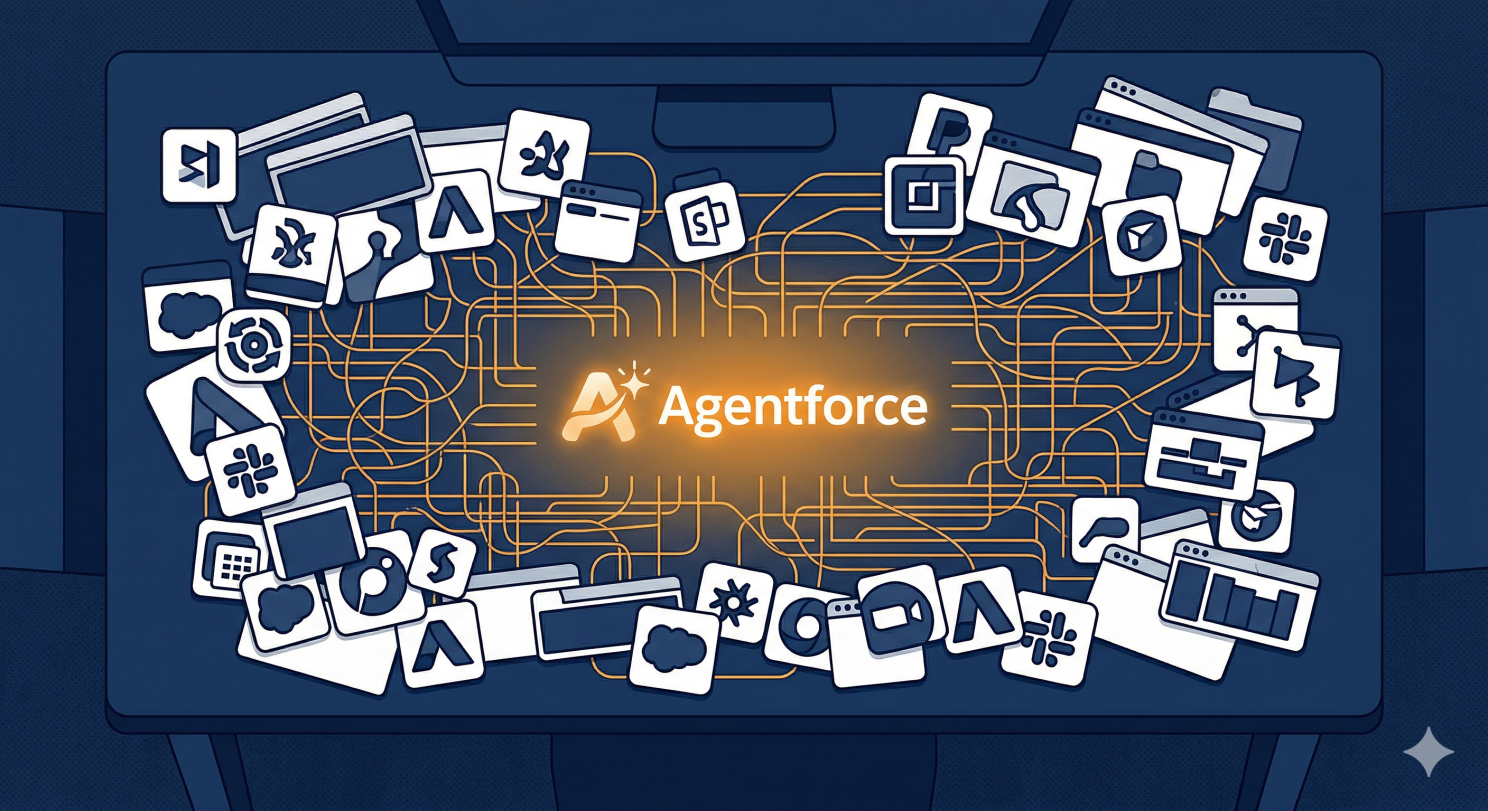
When your CRM provider acquires the entire inbound AI engagement layer, the argument for bolting on separate tools gets thin very quickly. Every integration point in your SDR stack represents complexity, data breach risk, training overhead, and vendor headaches you don't need.
I'm seeing this first-hand with clients across the region. The typical B2B sales organisation is managing 15+ tools. I had a client in Sydney last quarter whose integration project had a 5 year payback. That's not a tech stack — that's a tax.
The Drift Breach Makes This Even More Relevant
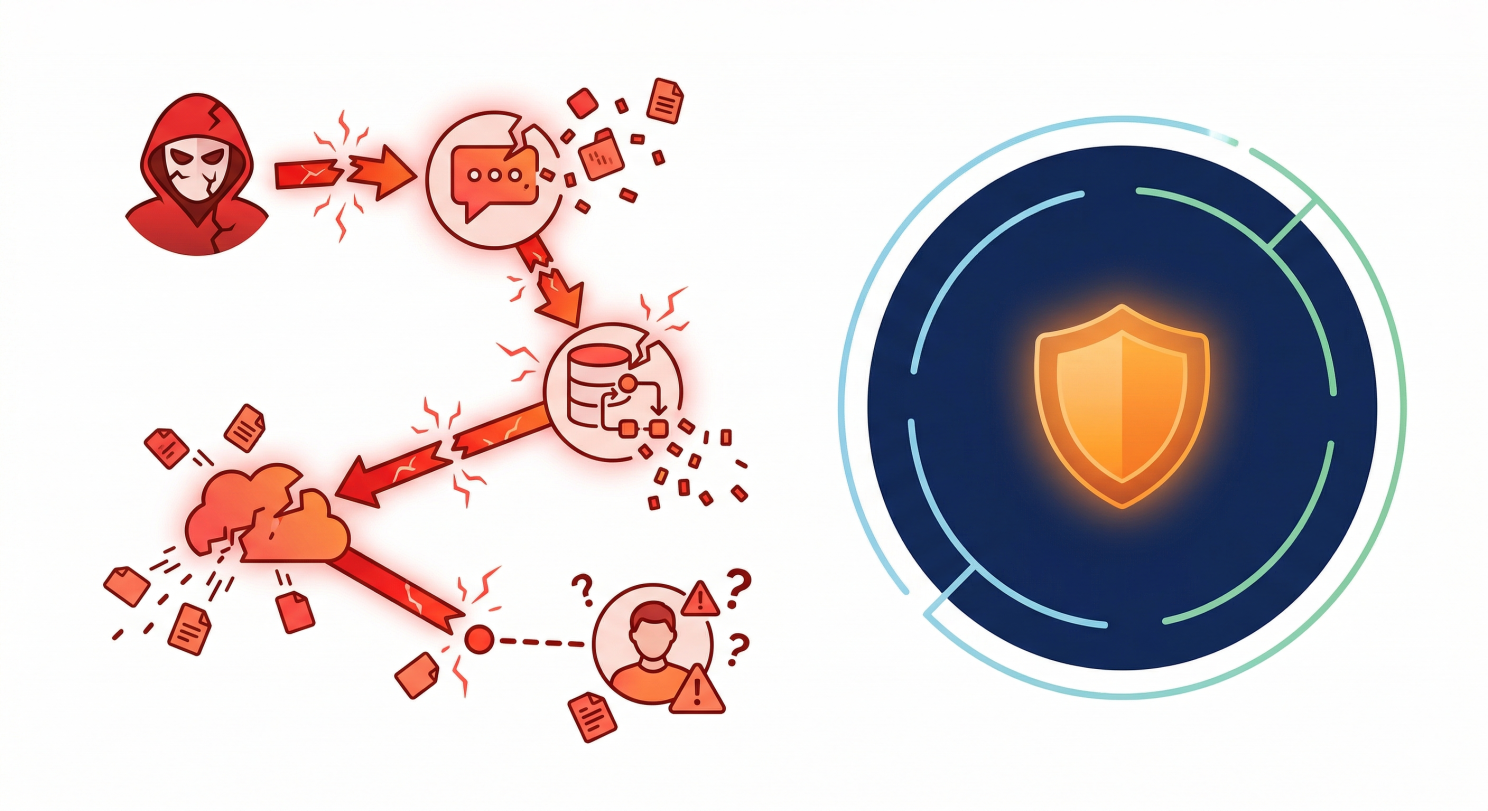
And if you needed a real-world reminder of why integration complexity is a genuine risk, not just an inconvenience, look at what happened with the Salesloft-Drift OAuth breach in August 2025.
Attackers stole OAuth refresh tokens from Salesloft's Drift integration with Salesforce. Those tokens allowed access to over 700 customer Salesforce instances. Contact data, case records, even API keys embedded in support tickets were exposed. High-profile companies like Cloudflare, Proofpoint, and Palo Alto Networks were impacted.
The attack chain was brutal: Attacker → Drift → Salesloft → Salesforce → Customer → Customer's Customer. Every integration point became a pathway.
This is exactly the kind of federated trust risk that native platform solutions eliminate. When the agent lives inside Salesforce, you're not creating cross-vendor OAuth chains that can be exploited. One platform. One security boundary. One throat to choke.
My Honest Take: What This Means for Salesforce Customers
I'll be straight with you. I think this acquisition is a signal that "good enough and native" is going to beat "best-in-class and bolted on" over the next 2-3 years.
And with Qualified, the gap isn't even reasonable. This was already the top-rated solution on the AppExchange. Now it's native.
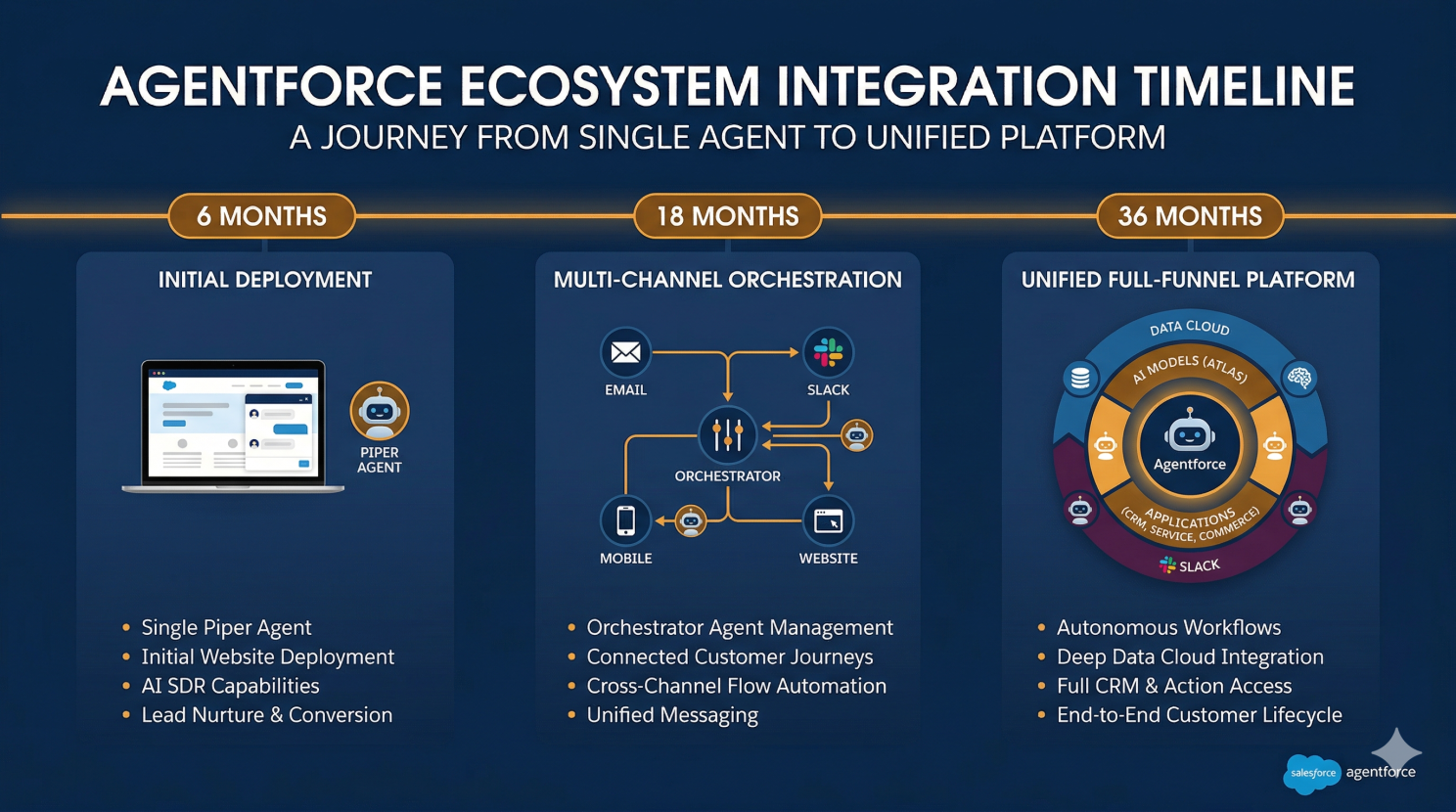
Here's what I think the timeline looks like:
Next 6 months: Qualified continues operating as a recognisable product within Agentforce. Existing customers see tighter Data Cloud integration and unified reporting. New Salesforce customers get an easy on-ramp - deploy Piper on your website as your first Agentforce win while you figure out your broader agent strategy.
6-18 months: Deeper embedding into Agentforce Sales and Agentforce Marketing. Piper's intent signals feed directly into Einstein lead scoring. Website visitor behaviour flows into Data Cloud through the SDK. The "where do I start with Agentforce?" question gets answered for revenue oriented customers: start with your website.
18-36 months: Full-funnel native agent. The distinction between "Qualified" and "Agentforce" blurs completely. Website engagement, email nurture, lead qualification, meeting booking, and sales handoff happen in one platform with one data model.
How to Start Early
If you're a current Salesforce customer and this excites you, here's what I'd do today:
Audit your SDR tool sprawl. Map every tool in your sales development workflow. Count the integrations. Calculate what you're actually spending on making them talk to each other / or the cost to swivel. Not just licence fees, but implementation, maintenance, and the opportunity cost of data inconsistency.
Get your data house in order. I know, I sound like a broken record. But an AI SDR is only as good as the foundation it sits on. If your CRM is a mess, your lead routing logic is held together with duct tape, and your knowledge base was last updated during COVID - fix that first.
Talk to your Salesforce AE about Qualified. Ask about early access, pilot programmes, and how Piper fits into your existing Agentforce roadmap. The early movers on this will have a significant advantage in speed-to-lead and conversion rates.
Evaluate what you can sunset. If you're running Drift (now under Salesloft and dealing with its own breach fallout), a standalone chatbot, or a separate meeting scheduling tool - start planning the migration path. The consolidation window is open.
The Bigger Picture
This acquisition fits a pattern that's been building all year. Salesforce also signed a definitive agreement to acquire Informatica for roughly $8 billion, targeting enterprise data management. Together, these moves sketch a Salesforce that's betting on owning both the data layer and the engagement layer of the agentic enterprise.
Data without engagement is just infrastructure. Engagement without data is just noise. The play is to connect both, and do it natively, inside one platform, with one security model, at enterprise scale.
The Uncomfortable Truth for Point Solution Vendors
For every sales tech vendor whose pitch starts with "we integrate seamlessly with Salesforce" - your integration is not a moat. It's a vulnerability.
The vendors who survive will be the ones building capabilities that genuinely can't be replicated inside a CRM platform. Network effects. Proprietary data assets. Use cases too specialised for platform vendors to prioritise.
Everyone else? Start thinking about your exit strategy.
What Happens Next
The era of the 20-tool SDR tech stack is ending. Not with a bang, but with a quiet email from a CEO on April 1st confirming that the deal is done.
I've spent 20 years watching Salesforce make moves. Some were brilliant. Some were baffling. This one? This one feels like the moment Agentforce stopped being a promise and started being a platform.
And honestly? I can't wait to deploy it.