

Editor's note (1 September 2026): The 15 August 2026 end-of-sale date has passed. Renewals beyond August 2026 are no longer available, per the Salesforce Help announcement cited in the body — that part of this article is now settled fact, not warning. The migration guidance below ran before the deadline and the steps remain the right path; the linked Salesforce Help doc is the current source of truth on the Ad Studio → Data 360 Ad Audiences transition.
"Brah. Did Salesforce just kill Ad Studio?"
If you're a Marketing Cloud Engagement (ExactTarget) customer who has been quietly connecting audiences out to Meta and Google for the last decade via Advertising Studio, congratulations, you are now on a clock. And like most things in Salesforce-land, the way you respond to this in the next six months is going to determine whether you spend 2026 calmly migrating or frantically rebuilding while your CMO asks pointed questions about why ROAS (Return on Ads Spend) has dipped.
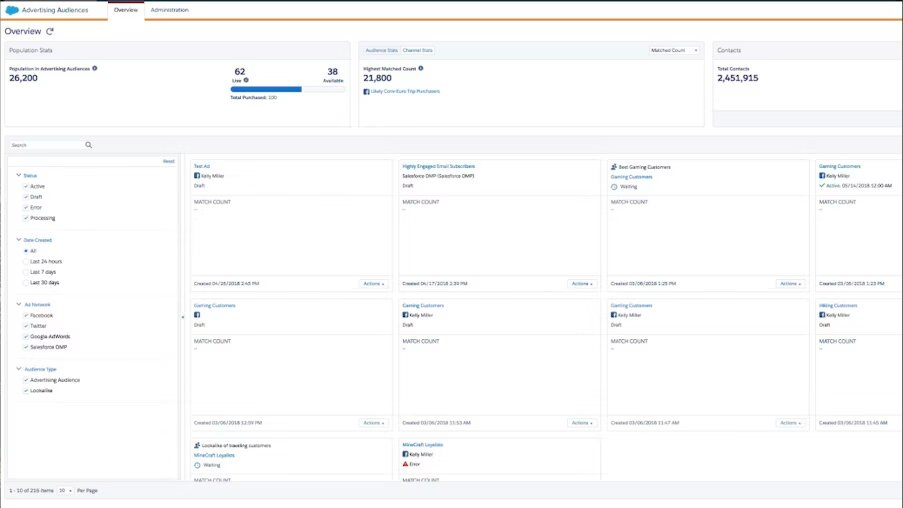
So pour yourself a coffee. Let's walk through what's actually happening, why, and what a sensible person ought to be doing about it.
What Salesforce Actually Said
On 4 September 2025, Salesforce sent an email to every active Marketing Cloud Advertising Studio customer with a sentence that did the rounds on LinkedIn faster than gossip in a small country town: subscriptions to Marketing Cloud Advertising Studio products will no longer be renewable after 15 August 2026 (Salesforce Help, Salesforce Ben).
This applies to every product sold under the names Marketing Cloud Advertising, Ad Studio, and Active Audiences, across all editions. Existing contracts run their course. Renewals beyond August 2026? Nope. The shop is closing.
The recommended path forward is Data 360 Ad Audiences. Which is a different product. Sitting on a different platform. With a different commercial model. Built by a different team. Otherwise yes, very similar.
A Quick Eulogy to MC Advertising Studio
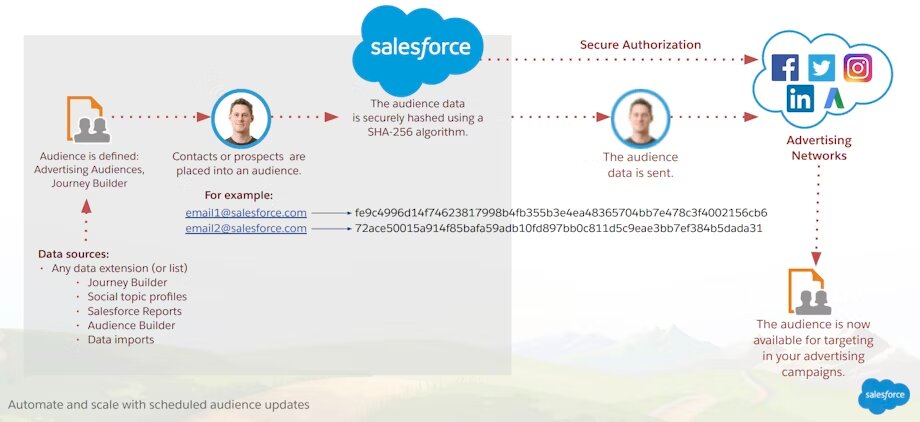
Advertising Studio didn't appear out of nowhere. Salesforce hoovered up ExactTarget for around US$2.5 billion back in 2013, and that became the spine of Marketing Cloud. Then in 2016 they paid roughly US$700 million for Krux, which in turn became Audience Studio (the DMP) (AdExchanger, Ascendix). Advertising Studio sat next to that, doing the slightly more boring but enormously useful job of taking your CRM data and shoving it across to Facebook, Google, LinkedIn, X, Snapchat and Pinterest so you could target known customers and look-alikes without uploading CSVs like a caveman.
For its time, this was genuinely clever. Most marketing teams in 2017 were exporting CSVs from a database, emailing them to an agency, and praying nobody pasted them into the wrong Slack channel. Advertising Studio replaced that with proper, automated, data-extension-driven audience syncs. It worked.
Audience Studio (the DMP) was the first to go, retired on 1 February 2024 after the death of third-party cookies turned a US$700 million acquisition into a slowly deflating balloon. Advertising Studio limped on, but in fairness, anyone using it knew it had been on life support for a while.
The tool has seen "minimal updates over the years, with no new features or destinations added recently" (Marcloud Consulting).
What's Replacing It (And What's Not)
Salesforce's preferred answer is Data 360 Ad Audiences, which is the activation layer of Data 360 (the artist formerly known as Data Cloud | CDP | Genie).
The pitch, to be fair to Salesforce, is reasonable on paper:
Real-time segmentation against unified, identity-resolved profiles. Activation to Meta, Google Ads, Amazon Ads, LinkedIn, Snapchat, The Trade Desk, Yahoo and LiveRamp (Salesforce Newsroom, Salesforce Marketing). Better privacy controls. Less manual export gymnastics. Built on an architecture that, for once, doesn't feel like it was glued together in 2014.
Where it gets spicy is the commercial model. Data 360 Ad Audiences is reportedly priced at around US$2,400 per audience per year, with separate Data 360 credits and data spaces consumption to think about. If you've been running fifty active audiences in Advertising Studio for what felt like beer money, you're going to want to have a sit-down with your AE.
The other thing nobody at Salesforce will tell you on the first call: the destination list isn't perfectly identical. TikTok, for one, isn't natively supported in Data 360 Ad Audiences at the time of writing. You can route to it via AppExchange add-ons like Cezium, but that's a separate procurement and a separate vendor to manage. If TikTok is a meaningful chunk of your media spend, raise this on the first call, not the fifth.
Do Data 360 For Data 360. Not For Ads.
Here's the thing nobody is going to say out loud while you're in panic-renewal mode: if the only reason you're standing up Data 360 is to replace Advertising Studio, you are setting yourself up to do this twice.
Data 360 is not a like-for-like swap for Ad Studio. It is a strategic architectural pillar of your entire Salesforce stack moving forward, and arguably of any non-Salesforce tech you have plugged into the side of it. Treating it as a quick fix to keep paid social humming is a bit like buying a new house because your old kettle broke. Yes, the kettle works. But the house has implications.
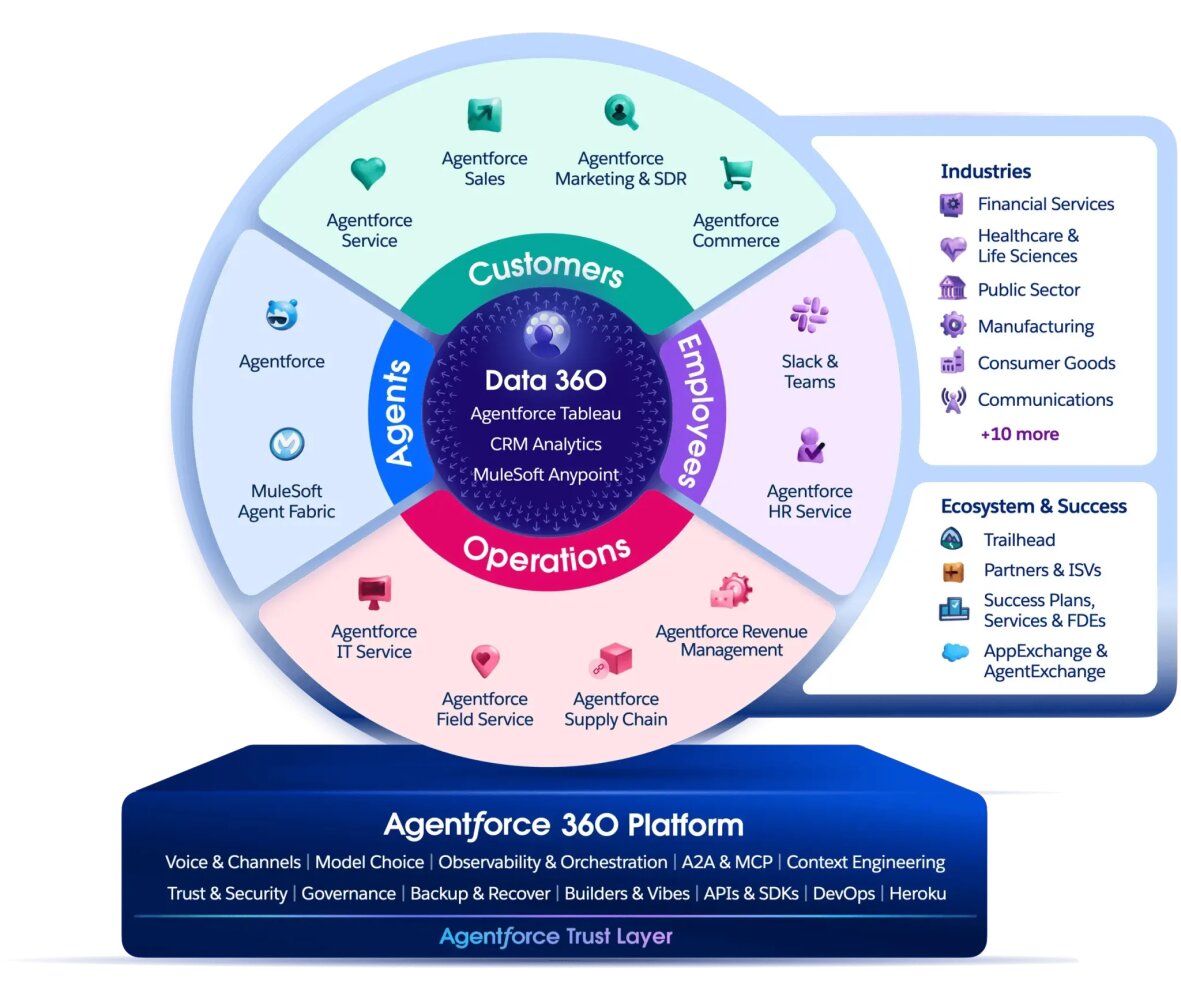
Think about what Data 360 actually touches once it's in. Consumption pricing decisions you make at implementation will follow you around for years. Agentforce and the broader AI roadmap lean on Data 360 as the source of truth, so a poorly modelled customer object model today is a poorly performing agent tomorrow. Customer data unification across Sales Cloud, Service Cloud, Commerce, Marketing Cloud, B2B and any of the seventeen other clouds, all of it leans on Data 360. Connections to your data warehouse, whether that's Snowflake, BigQuery or Databricks, run through it. Journey Builder driven off Data 360 segments behaves differently to one driven off classic Marketing Cloud data extensions, and that difference compounds. Predictive scoring, lead scoring, churn scoring, propensity models, all of it sits on top of the data you stand up here. And eventually consent, which everyone says is "important" right up until it isn't, becomes something Data 360 has to centrally manage if you have any hope of staying out of the regulator's inbox.
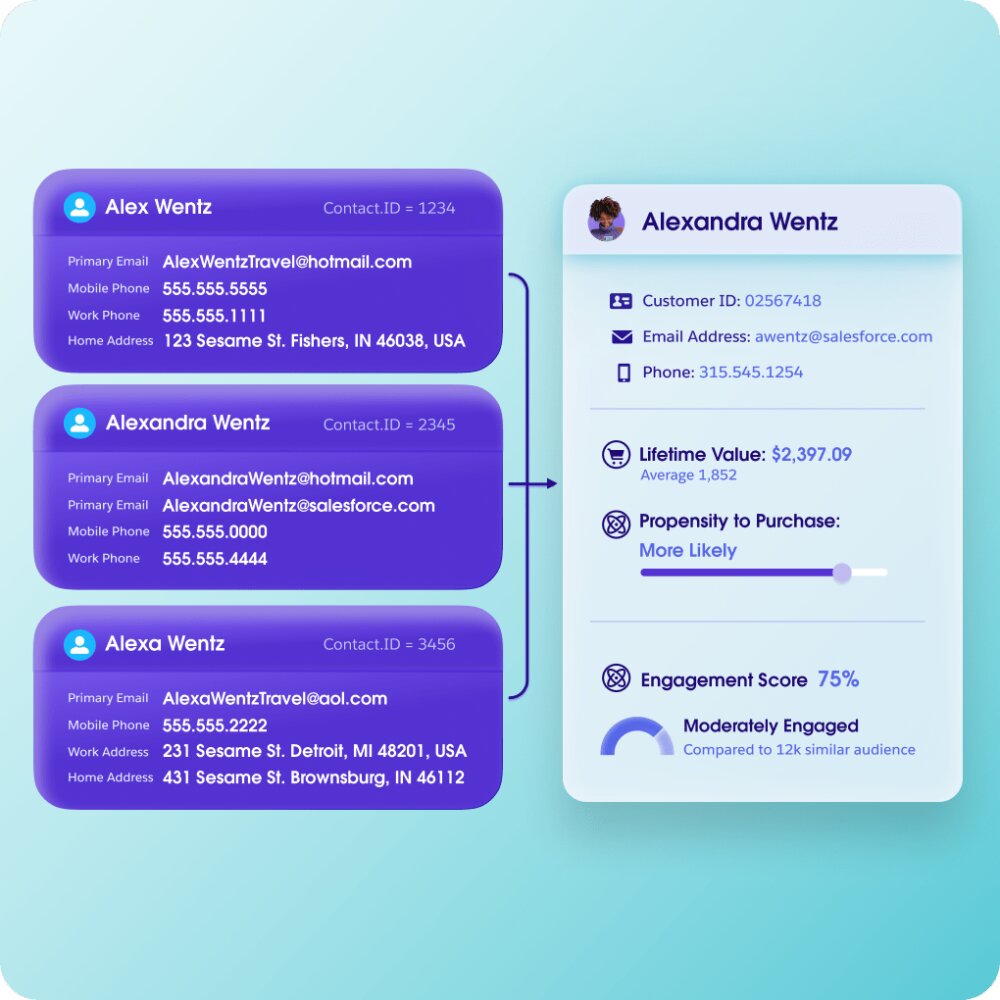
This is the single customer view your business has been promising in slide decks since 2018. You do not want to half-arse it because Sales is on the phone shouting about August 2026.
A sensible Data 360 implementation has stakeholder input from sales, marketing, service, e-commerce, data engineering and whoever owns privacy in your business. It has a named owner, not a "it kind of sits between Marketing and IT" arrangement that means nobody actually owns it. It has a real roadmap that goes beyond "turn on ad audiences", with phased use cases prioritised by business value, and a sensible model of what data lands in Data 360, when, and why.
If you do this correctly, Ad Audiences becomes one of the easier outputs to switch on, because the foundation is already there. If you do it backwards, racing to replace Ad Studio in six months and then bolting on the rest later, you will find yourself rebuilding the model in 2027 to support whatever the business actually needed, while paying for two implementations and none of the strategic upside.
So when your account exec rings up offering a "fast track to Data 360 Ad Audiences" by August, the right answer is yes, but not at the expense of the architecture. Data 360 is the platform every Salesforce license you own is about to start leaning on, and a fair chunk of the tech you've plugged in around it. Do it for Data 360. The ads will follow.

The Practical Bit: What You Actually Need to Do
Right. Coffee finished? Good. Here's the punch list I'm walking clients through.
1. Audit what you've actually got running. Pull an honest list of every active Advertising Studio audience, every destination, every business unit, every Journey Builder integration that depends on it. You will be surprised. Everyone is surprised. There's always a regional team in Auckland or Singapore using a sync nobody at HQ knew about. Find the orphaned audiences before they find you.
2. Map your spend. For each active audience, work out the media spend it influences. The audience that drives 60% of your paid social conversions is not the same migration priority as the lookalike one of your interns built in 2022 and forgot about. Triage.
3. Get a real Data 360 quote, not a vibe. If you don't already have Data 360, the cost of Ad Audiences plus credits plus data spaces plus implementation is the actual sticker. Ask for it in writing, with assumed audience counts and credit consumption. Then get a finance person to sanity-check it against your current Advertising Studio bill. If the gap looks dramatic, that's not a negotiation tactic, that's a real architectural decision.
4. Don't accept the first commercial offer. Salesforce knows you're on a clock. They'll be motivated to bundle Data 360 into your next renewal. Use that. Push for migration credits, for transition pricing, for sandbox time. Many customers I've spoken to have walked away with materially better terms than the first quote, simply by having a credible Plan B (see options 2 through 5 above).
5. Pilot in parallel. Don't switch off Advertising Studio until your replacement has been syncing audiences for a meaningful period. Run them side by side. Compare match rates. Compare conversions. Compare cost per acquisition. The dirty secret of every audience migration I've ever been near is that match rates differ between platforms, and you absolutely want to know that before you tell your CMO why their ROAS dropped.
6. Audit your Journey Builder dependencies. Advertising Studio audiences are often referenced inside Journeys. Those don't auto-migrate. List every Journey that touches an Ad Audience, document the trigger, document the wait step, document the entry criteria. Then plan the rebuild as part of the migration, not as a "we'll get to it" task.
7. Get on top of consent and privacy now. The new platforms, Data 360 Ad Audiences included, are stricter about consent flags, regional residency and PII handling than Advertising Studio ever was. If your consent capture and consent storage is a bit handwave-y today, this migration is the moment you tighten it. APAC privacy regimes have had a busy two years. Australia's Privacy Act reforms, Singapore's PDPA tweaks, and a long list of regional CCPA-flavoured cousins all want to know how you're handling first-party data (OAIC Privacy Act review). Don't carry your Advertising Studio sins forward.
8. Plan for the skills gap. Data 360 is not Marketing Cloud. It looks similar in places, and Salesforce will tell you it's all "one platform now," but the day-to-day reality of building activations, configuring data streams and managing identity resolution is meaningfully different. Your Marketing Cloud admin is not, by default, a Data 360 admin. Budget time and training. Or partners. Or both.
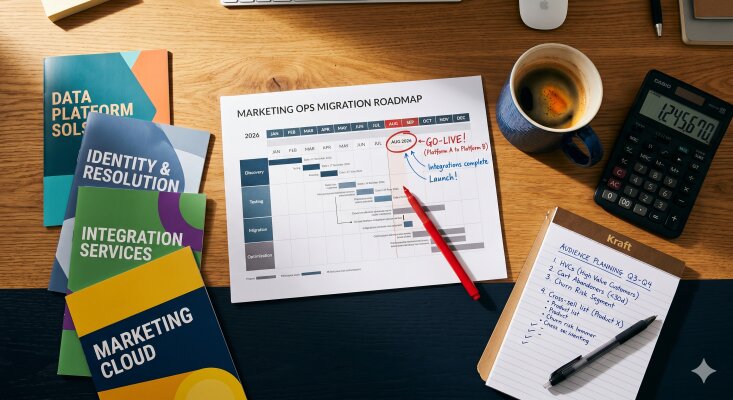
9. Don't sleep on the timeline. The marketing operations teams I respect most are budgeting 8 to 12 weeks for a clean migration, longer if multiple business units and regions are involved (Improvado). That puts you starting work in earnest by April or May 2026 at the absolute latest, assuming you want any kind of buffer before the renewals door slams shut. Ironically, that's now.
What Salesforce Won't Tell You
A few things I've noticed from the inside that nobody on the keynote stage is going to mention:
The commercial model shift is the real story, not the technology. Salesforce is moving everything to Data 360 because Data 360 monetises consumption (credits, audiences, data spaces) in a way that scales with your usage in perpetuity, in a way Advertising Studio never did. This is, fundamentally, a re-pricing event dressed up as a platform retirement. Treat it accordingly.
Match rates are going to wobble. When you rebuild audiences on identity-resolved profiles in Data 360, the audience IDs that hit Meta and Google will not be identical to the ones Advertising Studio sent. That's fine. That's often better. But your reporting baselines will move. Tell your CMO before they ask.
Don't assume Salesforce is the only buyer in the room. This retirement has put Hightouch, mParticle, Tealium and the like into a very buyerly mood. They smell blood in the water and they are pricing accordingly. If you've got a credible warehouse-native data stack, the conversation is genuinely worth having.
The Bottom Line for APAC Marketing Leaders
If you're running Marketing Cloud anywhere from Christchurch to Singapore, this retirement is one of the bigger forced moves of 2026. It's not the end of the world. It is the end of an era. Advertising Studio was a workhorse for nearly a decade, and the thing that's replacing it is genuinely better in many ways, if more expensive in most.
The biggest risk isn't that the technology doesn't work. The biggest risk is that you treat this as an IT project rather than a commercial and architectural one, and you wake up in July 2026 with a panicky deadline, a fat Data 360 quote, and no negotiation leverage left. The customers who handle this well will start in May, audit early, get multiple quotes, run a parallel pilot, and have everything cut over by July with time to spare. The ones who don't will be on a Saturday night call with their account exec in early August signing whatever's in front of them.
So tell me in the comments: are you migrating to Data 360, looking at a composable CDP, or have you decided point integrations with Meta and Google are enough for your shop?
Especially curious what the APAC marketing community is seeing on the ground, because the messaging from San Fran and the reality from down-under are sometimes very different postcards from the same trip.
References and Further Reading
- Salesforce Help. "Retirement of Marketing Cloud Advertising Studio." help.salesforce.com
- Salesforce Ben. "Salesforce Retires Marketing Cloud Advertising Studio: What You Need to Know." salesforceben.com
- Improvado. "Salesforce Advertising Studio Retirement 2026: Migration Guide for Marketing Ops." improvado.io
- Salesforce Newsroom. "New Salesforce Data Cloud Integrations with Google and LinkedIn Help Brands Build More Relevant Ad Campaigns." salesforce.com
- Salesforce Marketing. "Leverage First-Party Data for Targeted Ads." salesforce.com
- AdExchanger. "Salesforce To Buy Krux For $700M, Closing Ad Tech Gap With Rival Marketing Clouds." adexchanger.com
- Marcloud Consulting. "Marketing Cloud Advertising: More Important Than Ever?" marcloudconsulting.com
- Cezium. "Salesforce Marketing Cloud Advertising Studio Sunset." cezium.store
- OAIC. "Privacy Act Review." oaic.gov.au
---
Originally published on LinkedIn on 1 May 2026.
