

---
I was three glasses of mediocre Chardonnay deep on a flight back to Sydney, watching the seatbelt sign flick on for what felt like the fifth time, when I cracked open the Summer '26 preview release notes on my laptop. It was 1,400 pages of changes, and I had three hours and a dodgy in-flight Wi-Fi connection between me and the article you're now reading.
So buckle in. Or don't. I'm not your seatbelt sign.
If you read Salesforce Ben's Summer '26 prep guide by Tom Bassett (and you should, it's a tidy admin-focused piece), you'd be forgiven for thinking Summer '26 is an accessibility tweak, a Twitter retirement notice, and a cheeky little PDF rendering change. It's not. That article is the careful "don't get caught with your pants down on enforcement day" view. This article is the bigger picture: what's actually shipping, what's quietly transformative, what's marketing fluff, and what to plan for if you run a serious Salesforce ecosystem in your business.
Pour yourself something. Let's go.
---
Key Release Dates
Summer '26 is the second release of the year, and Salesforce is sticking to the calendar that has worked for them since the dinosaurs were around. Preview release notes dropped on April 22, 2026 (Salesforce Ben). Sandboxes get the preview around May 9, 2026, with the rollout properly kicking off on May 8 and production weekends running June 5, June 12, and June 13, 2026 (Enway, SFDC Developers).
If your sandbox isn't on the preview list, you've got until 5pm Pacific on May 4 to put your hand up if you want to play. Miss that and you're back to begging for a Partial Copy to be made available.
Head to Salesforce Trust, search by your domain, and click Maintenance to see exactly when your instance gets it. Do this now, not the day before.
---
Agentforce 360: is finally inside the furniture, not on top of it
The single biggest shift in Summer '26 isn't a feature. It's a posture change.
Agentforce 360, the umbrella platform Salesforce introduced at Dreamforce in October 2025, has now stopped being a bolt-on layer you switch to when you want to "do AI stuff" and become woven into the daily surfaces of the CRM (Martech Notes). Salesforce now reports more than 12,000 Agentforce customers as of this release cycle, and the engineering output reflects an org that has stopped trying to convince you the agent layer matters and started building like it does.
The keynote shorthand from Marc Benioff has been around what he calls the "agentic enterprise", and I'll admit I've been rolling my eyes at the phrase since roughly Q2 last year. But Summer '26 is the first release where the phrase is doing real work. Agents aren't a separate console anymore. They're inside Sales Cloud views. They're inside the Service Console. They're inside marketing authoring tools. They're inside your data pipeline setup, and they're inside your Lightning Pages (more on that AI Content Summarizer in a minute).
And while you're absorbing that, Parker Harris casually lobbed in the suggestion that you should "stop logging into Salesforce" altogether and let Slack be your front door, with Headless 360 exposing the entire Salesforce, Agentforce, and Slack platforms as APIs, MCP servers, and CLIs. Combine that with Slack auto-provisioning for every new Salesforce customer from this summer and you can see the strategic shape: Salesforce wants to be the system of record and the agent runtime, and it wants Slack (or your other agent surface of choice) to be the UI. The browser-based UI is being slowly demoted from "the product" to "one channel of many".
Right. Now let's get into what actually shipped.
---
Agentforce Service (Service Cloud)
Service Cloud (also known as Agentforce Service if you've drunk the rebrand Kool-Aid recently) gets a clutch of operational improvements in Summer '26 that look small on a slide and matter enormously on a Tuesday afternoon when your contact centre is on fire (Salesforce Ben Service Cloud Top Features).
Agentic Milestones
You can now mark specific milestones within an SLA policy as "agentic" and use Prompt Builder to define how the comms around those milestones should be written. Agentforce takes it from there. The chase emails. The "we're still working on it" updates. The polite "hello, you're now 90% of the way to a breach and we should probably tell the customer" notifications. Gone from your queue, written better than your team writes them at 4:55pm on a Friday, and consistent across every case.
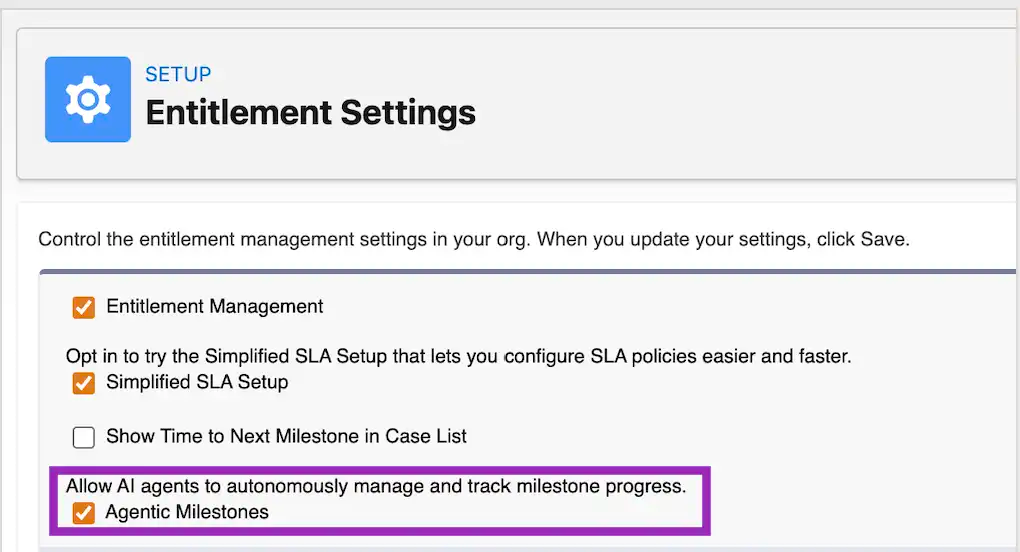
This is one of those features that's genuinely going to free up senior service agents from a meaningful chunk of busywork, provided you've got your SLA policy modelling in order. If you don't, you'll be marking everything agentic and then spending a quarter wondering why your CSAT score has dipped.
Priority based on original request date
Here's a small change with a big reputational impact. Work items can now be prioritised by their original request date rather than when they hit the current queue. Previously, transferring a case between queues effectively reset its position, and you'd have customers who'd been waiting a week jumping to the back of the line because someone clicked the wrong button at lunch. Summer '26 fixes that.
If you've ever had a Slack DM from a Customer Success Manager saying "remind me why this customer's Case has been open for nine days?" and you didn't have a good answer, this one's for you.
Future-scheduled work routing
You can now schedule work items to be routed at a specific date and time in the future, rather than dumping everything in the backlog the moment it's created. Useful for promised follow-ups, scheduled callbacks, and the very civilised practice of not waking up your APAC ops team because someone in the US logged a non-urgent question at 3am Sydney time.
---
Agentforce Sales (Sales Cloud)
The rebrand from Sales Cloud to Agentforce Sales that Salesforce slipped in during Spring '26 has bedded down, and Summer '26 brings the meat (Salesforce Ben Sales Cloud Top Features).
Agentforce now qualifies Contacts and Person Accounts, not just Leads
Previously, your prospecting agent would happily qualify Leads and then hand the baton to a human the moment a record got converted. As anyone who's actually run a B2B sales org knows, this is a problem, because half your pipeline lives on Contact records connected to existing Accounts, and your Person Accounts (B2C, financial services, healthcare) were being ignored by the agent entirely.
Summer '26 fixes the gap. Agentforce can now qualify Contacts and Person Accounts using the same conversation-based logic and ICP matching it applies to Leads. Practically, that means your existing CRM data pulls more weight in the qualification process, your reps don't have to re-enter prospects to get them looked at, and your agent stops behaving like a fresh graduate who's never seen the org before.
Sales Management Agent
This one's small but I genuinely cheered when I read it. You can now define exactly which fields the Sales Management agent is allowed to update on a seller's behalf. Want it to update Next Steps and Stage but not touch Amount or Close Date? Done. Want it to never go near anything labelled "Forecast Category"? Easy.
If you've ever had an over-eager AI assistant casually edit a $4M opportunity into next quarter because it interpreted a meeting note generously, you'll understand why the ability to lock fields down is a feature your CRO has been crying out for.
Pipeline Inspection
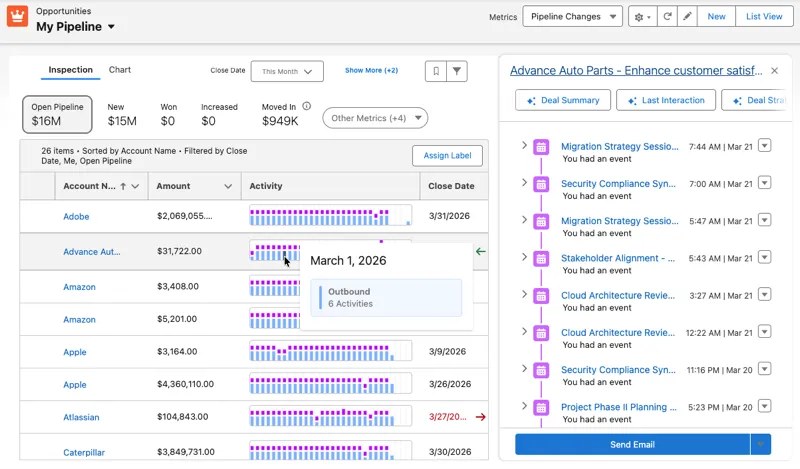
Pipeline Inspection now includes a new Activity column with a heatmap view that shows engagement levels across a rolling 30-day window. Green for hot, red for "this opportunity hasn't had a meaningful touch since the last election", with everything in between. It's the kind of thing your Sales VP will spend twenty minutes staring at on day one and then refuse to live without.
Goals
Goal-setting in Sales Cloud was previously a slightly awkward currency-only affair. Summer '26 lets you define goals as either currency-based (revenue) or quantity-based (number of new logos, units sold, courses booked, whatever your business actually measures). A small thing, but if your business sells something other than enterprise software for the price of a small house, this finally makes the goals feature usable for you.
AI Content Summarizer
You can now drop a new AI Content Summarizer component on any Lightning page, point it at the relevant content (a record, a case, a long-running opportunity, an Account history), and get an AI-generated summary inline. No separate assistant pane. No "click here to launch the agent". Just a summary, in context, where your users already are.
Why does this matter? Because the dirtiest secret of enterprise CRM adoption is that nobody reads anything. Your salespeople don't read your meticulously updated Account notes. Your service agents don't read the case history. Your managers don't read the half-dozen related opportunities before walking into a customer meeting. The Content Summarizer turns "you should have read this" into "here's what you need to know in twelve seconds, before you click into the call".
I'm tipping this becomes one of the most-deployed Lightning components by the end of 2026. Quietly transformational, the way good plumbing is.
---
Marketing Cloud Next
Marketing Cloud Next has been the awkward middle child of the Salesforce family for a while: clearly the future, clearly not yet ready to inherit the throne. Summer '26 closes a lot of the gaps that were keeping serious senders on classic Marketing Cloud Engagement (Salesforce Ben Marketers Top Updates).
AMPscript Support
Yes, finally. AMPscript, the personalisation language that's been the duct tape holding Salesforce email marketing together for fifteen years, is supported in Marketing Cloud Next. If you've been holding off the migration because your AMPscript library represents three years of senior architect time, you can now actually plan the move.
Form enhancements, plain text, custom fonts, multilingual messaging
The other tradeoffs that were keeping people on Engagement also fall away. Forms get enhancements that reduce dependency on CloudPages. Plain text email is finally a first-class citizen. Custom fonts work properly. Multilingual messaging is built in. Each one of these is a "we're not migrating until you fix this" objection from a senior martech leader, and Salesforce has knocked them off in a single release.
RCS finally arrives
Rich Communication Services lands as a conversational messaging content type. SMS has been a flat, lifeless channel for years, and Summer '26 brings RCS to the front door with rich cards, images, carousels, and suggested reply buttons rendered natively in the messaging app. For brands with serious mobile audiences (looking at you, every Australian retailer and bank), this is a genuine shift in what's possible without forcing customers into a separate app.
E-commerce triggers and dynamic offers
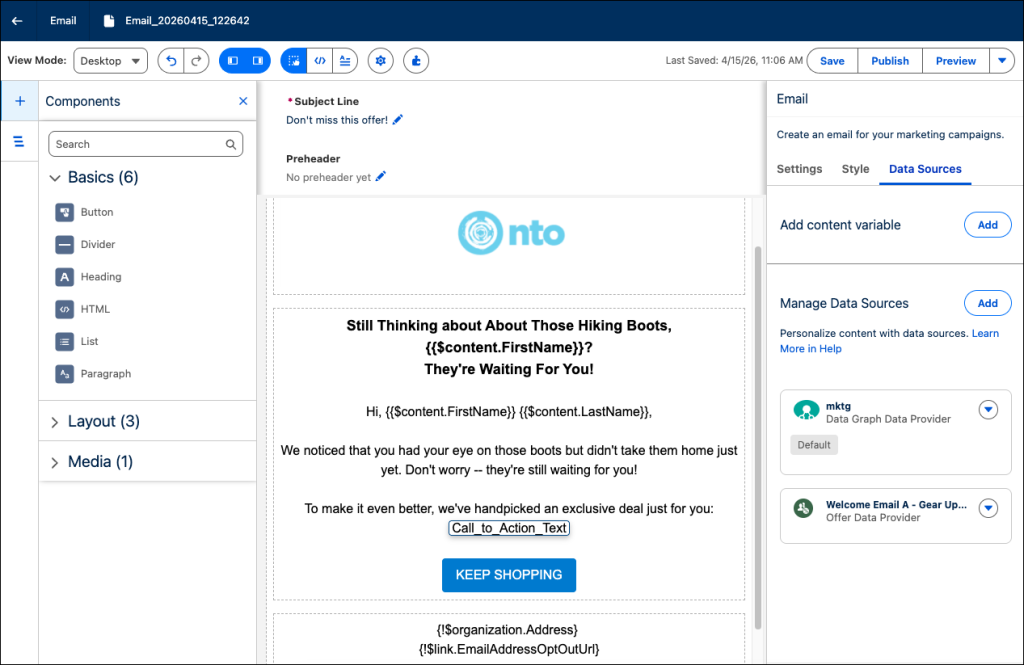
Summer '26 also adds custom-built triggers for the unsexy-but-extremely-revenue-positive moments: abandoned carts, price drops, back-in-stock notifications, and order lifecycle milestones. Marketers can fire personalised messages off these triggers across channels in near real time, and embed dynamic promotional offers directly into emails using structured offer data. If you're running a Commerce Cloud and Marketing Cloud Next combo, the loop between "customer browsed", "customer almost bought", and "customer got a tailored nudge" gets dramatically tighter.
---
Tableau Next
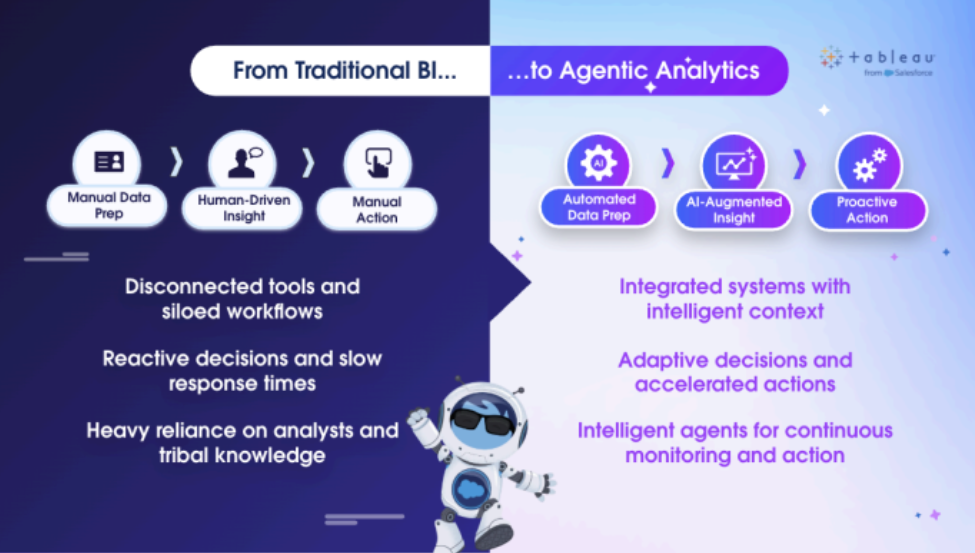
Tableau Next went GA for ISVs in April 2026, which means partners can now build, package, and embed interactive analytics and AI agents directly inside their products (Salesforce Tableau Next, Salesforce Ben on Agentic Analytics). For Salesforce ISVs in APAC, this is significant: you can now ship analytics and AI inside your AppExchange product without rolling your own dashboard layer or shoving customers off to a separate Tableau license.
Data Pro, Concierge, and Inspector
Tableau Next ships with three pre-built agent skills, and they're more useful than the names suggest.
Data Pro handles the unglamorous side of analytics: prep, modelling, and visualisation. The "I just want to clean up this dataset and get a chart" workflow that takes a junior analyst two days now happens in a chat window in twenty minutes.
Concierge is your natural-language query interface. Ask "why did revenue drop in March in the SE Asia region", get an answer, the underlying chart, a plausible root cause, and a suggested next-best action. Whether it's right is a different question. It's at least asking the right one, which is more than I can say for a lot of dashboards I've inherited.
Inspector is the one I'm most interested in. It proactively monitors your data in real time and surfaces anomalies and trend changes. Effectively, it's pager duty for your business metrics. If your retention rate dips in a specific cohort, you find out before someone in a board pack notices three weeks later.
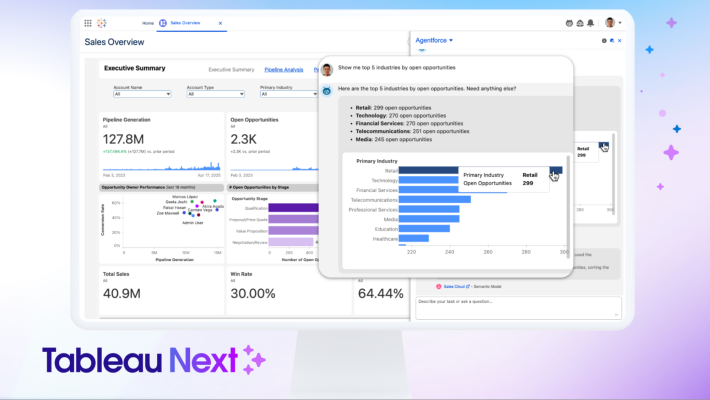
Tableau Semantics
Tableau Semantics is the unified semantic layer that sits beneath both Tableau Next and Agentforce, ensuring agents and humans are looking at the same metric definitions. This sounds boring. It is the most important thing in the analytics announcement.
Why? Because the single biggest reason agentic analytics has failed at every enterprise I've worked with is that "revenue" means seven different things across seven different teams. Without a semantic layer, your AI is going to give you seven different answers to the same question, and your CFO is going to set fire to the project. Semantics is the unsexy backbone that makes the rest of this work.
---
Data 360 (Data Cloud)
Data 360 (renamed from Data Cloud last year, in case anyone in your org is still calling it the old thing in meetings) gets a serious upgrade in Summer '26 with Agentic Setup and Data Management going GA (Salesforce Help: About Data 360 Releases).
In English: your data pipeline setup, schema mapping, ingestion configuration, identity resolution, and activation no longer require a senior Data Cloud consultant who charges Sydney property prices. You describe what you want in natural language. The agent suggests connections, mappings, and pipeline logic. You confirm or correct. It builds.
I'm cautiously optimistic and professionally cynical about this one. The technology is real. The use case is enormous. The risk is that the agent makes confident-looking decisions on data ingestion that look fine in the demo and quietly destroy your customer 360 view in production. Test in a sandbox. Compare the agent's output against the choices an experienced consultant would make. Don't let it touch your identity resolution rules until you've built trust over three or four iterations.
The other Data 360 announcement worth flagging is Agentic Enterprise Search, which is now in preview and powered by Data 360. The pitch is a single search interface that pulls context from 200-plus external sources, understands relevance and context, and coordinates action across multiple agents. It's the universal entry point that the Headless 360 strategy needs to actually work. Watch this one. If it lands properly, the way enterprise software gets used changes shape.
---
Flow
Flow gets a tidy little upgrade pack in Summer '26 (Salesforce Ben: 10 New Flow Features). The marquee additions:
A new Radio Button Group screen component that displays options as horizontal boxes (and converts to a Checkbox Group with one toggle if you allow multi-select). Collapsible fault paths, so your canvas stops looking like a Jackson Pollock when you've got three Update Records elements with error handling.

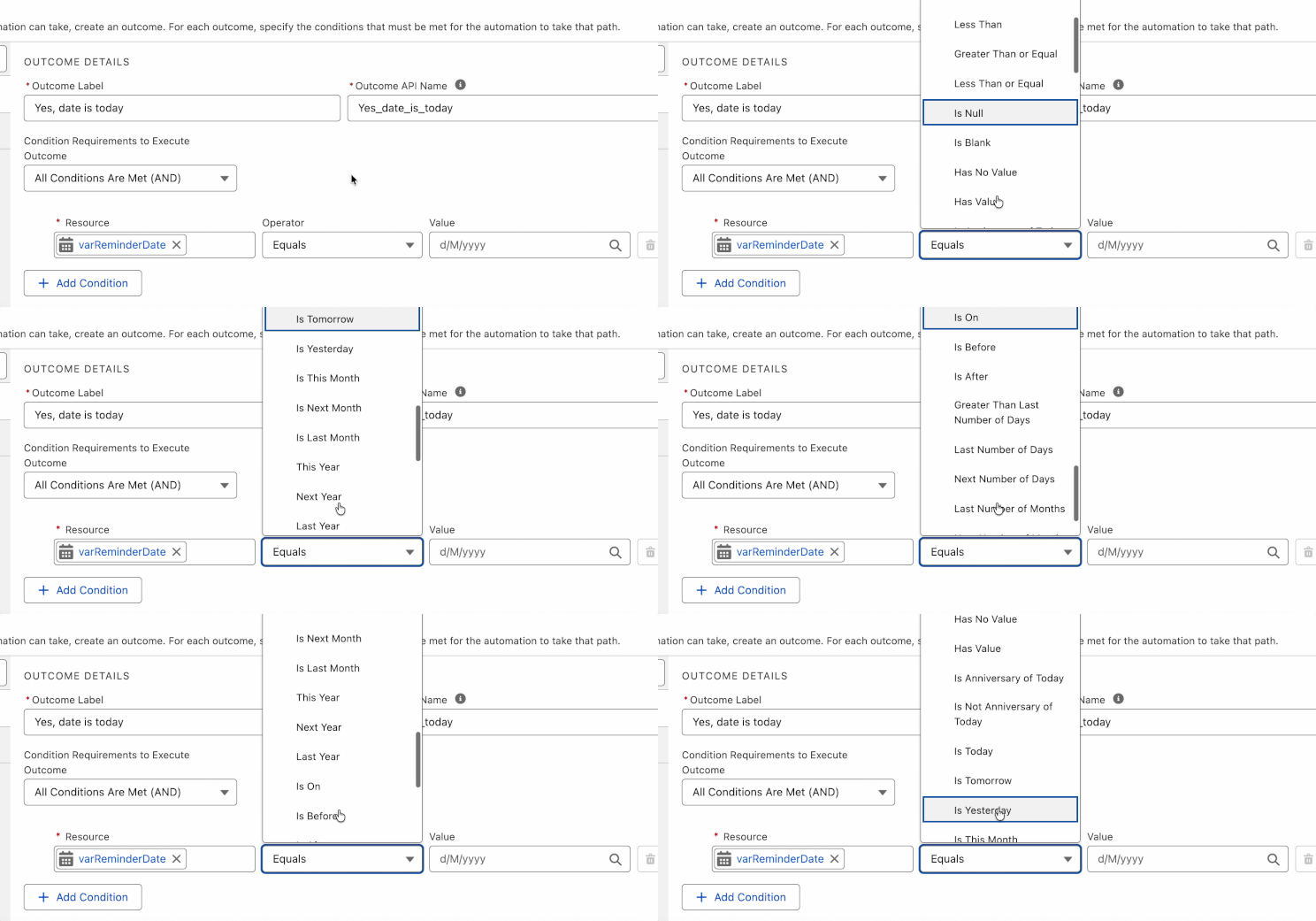
A vast set of new date operators including "Is Today", "Is Tomorrow", "Is On", and (a personal favourite) anniversary references for renewal and birthday triggers. Batch size restrictions on Scheduled Flows, so you can stop your overnight automation from cooking your governor limits when the volume spikes.
Data Tables that show actual record names instead of cryptic IDs, with click-through to the record. Email Template advanced options that fix the deeply annoying "deployed and now nothing sends" problem when you move a Flow between environments.
None of these are revolutionary. All of them remove a small but real annoyance that admins and devs have been working around for years. The cumulative effect is meaningful. Your Flow build velocity should noticeably improve.
---
Salesforce Admin Features
The Salesforce Admin team has been on a quiet tear lately, and Summer '26 keeps it going (Salesforce Ben Top 11 for Admins, Admin Release Countdown).
Field Access tab in Object Manager
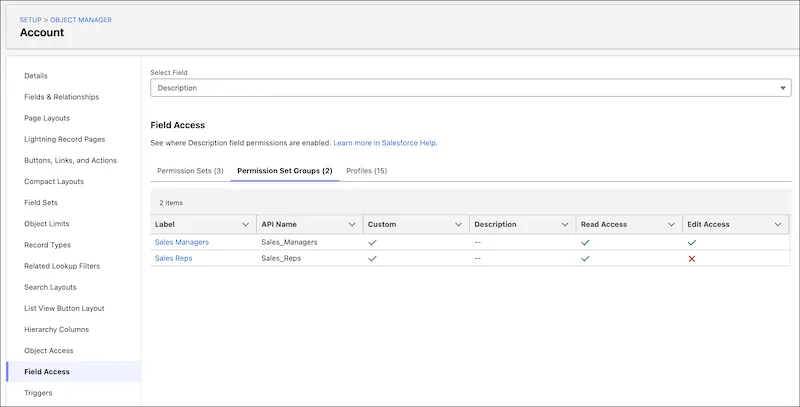
This is the feature admins have been begging for since permission sets stopped being optional. A new Field Access tab sits at the bottom of every object in Object Manager. It tells you exactly who can see and edit each field, across profiles and permission sets, in one view. No more running three reports, exporting to Excel, and using INDEX MATCH like it's 2014. No more "I think Sales has access to this, let me check seven different places". One tab. One answer.
Web Console
Salesforce Web Console is a lightweight, browser-based IDE built directly into your org and available across every org type, including free Developer Editions. Think of it as VS Code Lite, available without installing anything, for the moments when you need to inspect or edit something quickly without firing up a proper IDE. For admins who occasionally need to read Apex without becoming developers, and for developers who need to do quick edits from someone else's machine, this is genuinely handy.
Manage Shared List Views permission
A new toggle lets shared list views be editable, and a new "Manage Shared List Views" permission lets users share their personal list views with roles, groups, and territories without needing admin rights. This is a small permission change that solves a real political problem in larger organisations: stop bothering your one senior admin every time a sales manager wants to share a List View with their team.
---
Salesforce Developer Features
The developer side of the release is where Summer '26 quietly reveals just how aggressively Salesforce is investing in the agentic enterprise pitch (Salesforce Ben: Top 8 Features for Developers, Salesforce Developers Blog).
Agentforce Vibes in every Developer Edition org
Every Developer Edition org now ships with Agentforce Vibes IDE access, Claude Sonnet 4.5 as the default coding model, and Salesforce Hosted MCP Servers, all at no cost (Salesforce Developers Blog). For anyone learning Salesforce dev or experimenting on the side, this is a serious gift. For employers, it means your new graduate hires can get up to speed using the same tooling your seniors are using in production.
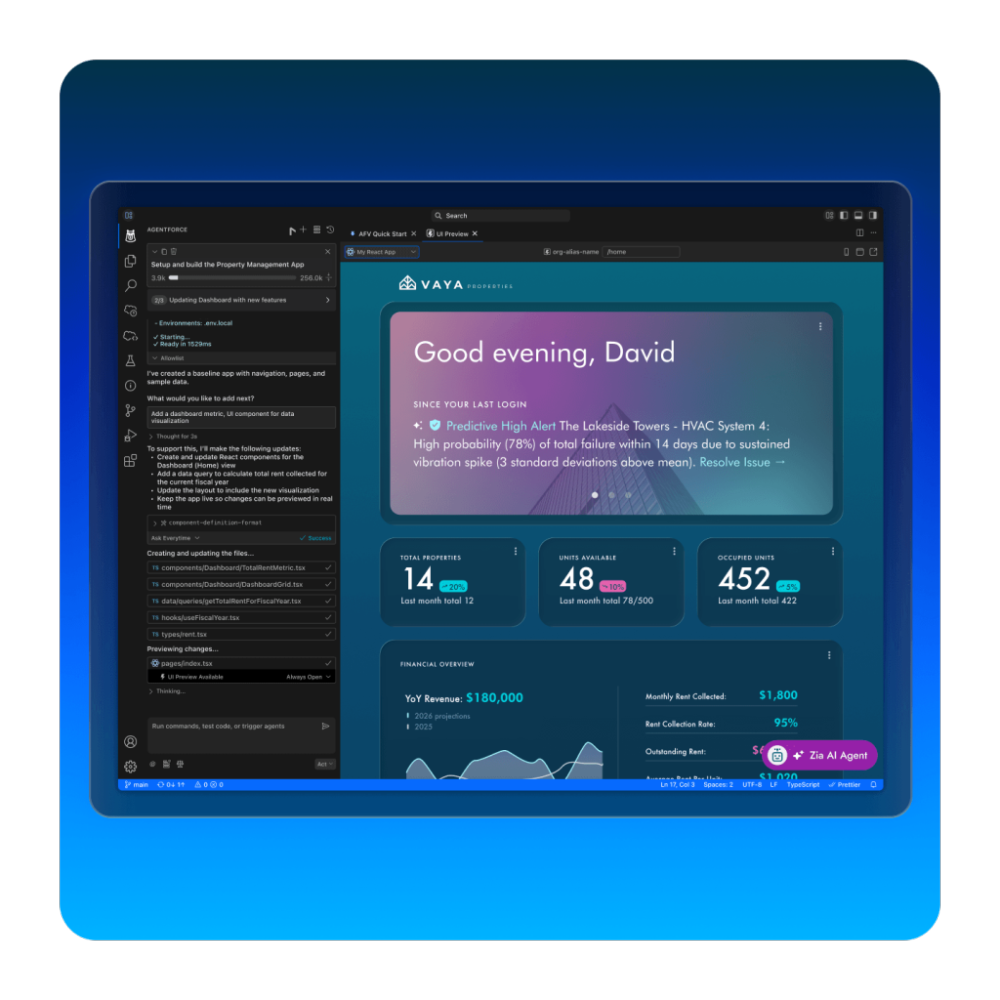
I'll note for the record that Salesforce calling this "vibe coding" is the kind of marketing decision that makes me gag, but the underlying capability (an AI pair programmer grounded in your Salesforce metadata) is the real deal.
LWC: Single Component Preview, State Management GA, and dynamic list components
Single Component Preview is now GA. You can preview a single LWC you're working on in your browser or VS Code without reloading the whole page. Faster iteration, fewer accidental tab-closes when you're frustrated. State Management is also GA, which means proper data sharing between components without the fragile tricks the community had been using. And in the Dev channel, the new lightning-dynamic-list-container and lightning-dynamic-list-item components let you load large lists dynamically, which has been a notable performance gap in the platform.
Apex: API v67
This is a sleeper. From Summer '26, any Apex written using API v67 will default to "with sharing" if no sharing declaration is present. For fifteen years, the default has been the opposite, and a depressing percentage of platform vulnerabilities trace back to that single ergonomic decision. Salesforce has finally flipped it. Existing classes are unaffected. New v67 classes will default correctly.
Combined with multiline strings and string templates also landing in Summer '26, this is the most modern-feeling Apex update in years.
Custom property editors and Apex Action improvements for Flow
For developers who build invocable Apex actions for Flow, you can now add custom property editors per individual input rather than for the whole input set, define picklists for action inputs, and add a custom header to the configuration page in Flow Builder. Low-key, but if you've ever shipped a Flow component and watched a junior admin try to figure out which of the seven free-text inputs needs the API name versus the label, you'll recognise the value.
---
Updates that'll actually break shit, if you ignore them
Right, the bit Tom Bassett's Salesforce Ben prep guide covers in detail, and which I'll briefly second because if you don't action these you're going to have a bad time.
Accessibility enhancements at 200%+ zoom. Summer '26 enables accessibility tweaks for page headers, modals, date pickers, popovers, bottom utility bars, and record headers when users zoom past 200%. Most of your users won't be at that zoom level. Some will. If your custom Lightning pages use custom CSS, test them in a sandbox at 200% and 400% zoom. Don't deploy on a Friday.
X (formerly Twitter) Auth Provider retirement. Salesforce-managed Twitter authentication is being retired. If you've got Auth Providers with Type = Twitter and a blank Consumer Key and Secret, you're impacted. Note this does not affect the X Ads connector for Marketing Intelligence in Data 360. You'll need to create a new app in the X Developer Portal, copy the API Key and Secret into your Auth Provider, and reconfigure callback URLs. Allow a couple of hours, do it during quiet windows, and check both standard and Experience Cloud callback URLs as appropriate.
Apex Blob.toPdf() aligns with Visualforce service. Apex's PDF rendering gets the better fonts and multi-character text handling that the Visualforce service has always had. This is a quality upgrade, not a regression, but it's still a behavioural change. Search your Apex for Blob.toPdf(, capture before-and-after PDFs in a sandbox, and confirm your custom layouts still render correctly. Make sure your Apex has sufficient test coverage or your deployment to production gets blocked.
Multiple-Configuration SAML Framework migration. Originally flagged in Summer '24 and rescheduled twice, this one is being enforced in Summer '26. If your SSO is on the original framework, plan the upgrade now. SSO failures on a Monday morning are the fastest way to go from "respected admin" to "person being shouted at".
Update Instanced URLs in API Traffic. Covered in Spring '26 prep. Now enforced in Summer '26. If you haven't moved off *.my.salesforce.com URLs in your integrations, do it.
Sort Apex Batch Action Results by Request Order. Covered in Spring '25 prep. Now enforced in Summer '26. Your batch results will now come back in request order, which is the order most code assumes. Most things will be fine. Some things won't. Test.
And two pieces of good news: the Adopt the ICU Locale Formats release update is no longer being enforced, although Salesforce still recommends enabling it. The No-Argument Constructor on Apex Classes Used for Invocable Action Parameters enforcement has been cancelled, also still recommended manually. Tom's article walks through both of these properly if you want detail.
---
What the marketing slides won't tell you
Every release deserves a sceptical bit. Here's mine.
Agentic Setup in Data 360 is the highest-risk-highest-reward feature in this release. The capability is real. The risk of a confidently-wrong agent silently degrading your data foundation is also real. Treat agent-built data pipelines the way you'd treat a junior consultant's first solo build: review every output, compare against expert-built equivalents, and don't ship until you trust it. Speed without trust is just expensive failure.
Marketing Cloud Next is finally migration-ready, but it's not a one-weekend job. Even with AMPscript support, custom fonts, plain text, and forms enhancements, a real migration from Engagement to Next is a six-to-twelve month program for any senior B2C brand. Consent convergence (unless you're on MC Account Engagement which was solved in Spring 26') is extremely complex and custom to orchestrate, there is no native feature yet to support this - so if you want MCE and MCA to run in parallel for a while, you will need advice.
Read this article: What Salesforce isn't telling you about MC Next Consent Convergence.
Headless 360 and the "stop logging into Salesforce" pitch is a strategic shift, not a feature. It's also at least 12 to 18 months from being how your people actually work, regardless of what Marc says on X. Headless 360 implies (agents, APIs, MCP, Slack as front door) but don't gut your Lightning UX strategy this quarter on the basis of a tweet.
Read this article: Headless 360: Salesforce just killed the browser, and honestly, good
The "Web Console" is brilliant for quick fixes and dangerous as a primary IDE. It encourages live editing in production-adjacent environments. That's fine for your senior architects and a massive risk for everyone else. Set governance boundaries before you turn it on.
---
The bottom line for APAC enterprise leaders
Summer '26 is not a flashy release. It's a release where the plumbing got significantly tighter, the agent layer stopped feeling like a separate product, and the migration paths off legacy products finally got real.
If you're running a complex Salesforce org, here's what I'd actually do over the next eight weeks.

Action your enforcement work first. The X auth retirement and the SAML migration will hurt if you ignore them, and the testing for Blob.toPdf and accessibility takes longer than you think. Get your sandbox cycle running this week.
Then turn your attention to the agentic features that quietly matter most. The Agentic Milestones in Service Cloud have a ridiculously short payback period. The Field Access tab will save your admin team hours every week. The AI Content Summarizer should be on every record page where users have ever said "I don't have time to read all that". The Sales Management Agent field controls should be turned on before any sales leader sees what an unconstrained AI will do with their pipeline.
If you're seriously considering Marketing Cloud Next, this is the release where the migration becomes "more" feasible. Don't wait for next year. Get a parallel sandbox cycle running and get advice on your consent strategy. (Ask me!)
And if you're still running Agentforce as a side experiment that nobody owns, Summer '26 is the release where you have to make a decision. Agentforce 360 is now woven into the surfaces. Either commit to a real operating model around AI strategy, Agent ownership, governance, and observability, or accept that it'll quietly become tech debt the way every well-intentioned-but-ungoverned platform investment in the history of enterprise software has done.
The tooling has caught up. The platform is mature enough to do real work. The remaining gap is, as it has been since 2024, how well organisations adopt.
---
References and Further Reading
- Salesforce Ben. "Salesforce Summer '26 Release: What to Expect and How to Prepare." salesforceben.com
- Salesforce Ben. "Salesforce Summer '26 Release Date + Preview Information." salesforceben.com
- Salesforce Ben. "Service Cloud: Top Salesforce Summer '26 Features." salesforceben.com
- Salesforce Ben. "Sales Cloud: Top Salesforce Summer '26 Features." salesforceben.com
- Salesforce Ben. "Top 9 Summer '26 Updates for Salesforce Marketers." salesforceben.com
- Salesforce Ben. "10 New Salesforce Flow Features in Summer '26." salesforceben.com
- Salesforce Ben. "Top 11 Salesforce Summer '26 Features for Admins." salesforceben.com
- Salesforce Ben. "Top 8 Salesforce Summer '26 Features for Developers." salesforceben.com
- Salesforce Ben. "Salesforce Introduces 'Agentic Analytics' in Tableau to Solve Rising Data Issues." salesforceben.com
- Salesforce Admins. "Admin Release Countdown: Get Ready for Summer '26." admin.salesforce.com
- Salesforce Developers Blog. "New in Salesforce Developer Edition: Agentforce Vibes IDE, Claude 4.5, MCP." developer.salesforce.com
- Martech Notes. "Salesforce Summer '26 Release Notes Drop: What Admins and Marketers Need to Know Today." martechnotes.com
- Martech Notes. "Salesforce Summer '26 Preview Orgs Are Live: Agentforce, Tableau Next, and Flow Updates." martechnotes.com
- Enway. "Key Dates for the Salesforce Summer '26 Release." enway.com
- SFDC Developers. "Salesforce Summer '26 Release Dates and Sandbox Preview Schedule." sfdcdevelopers.com
- Salesforce. "Tableau Next." salesforce.com
- Salesforce. "Agentforce Vibes." salesforce.com
- Salesforce DevOps. "Parker Harris Just Told You to Stop Logging into Salesforce." salesforcedevops.net
---
Originally published on LinkedIn on 26 April 2026.
